Quick Key Takeaways – Commercial Electrician
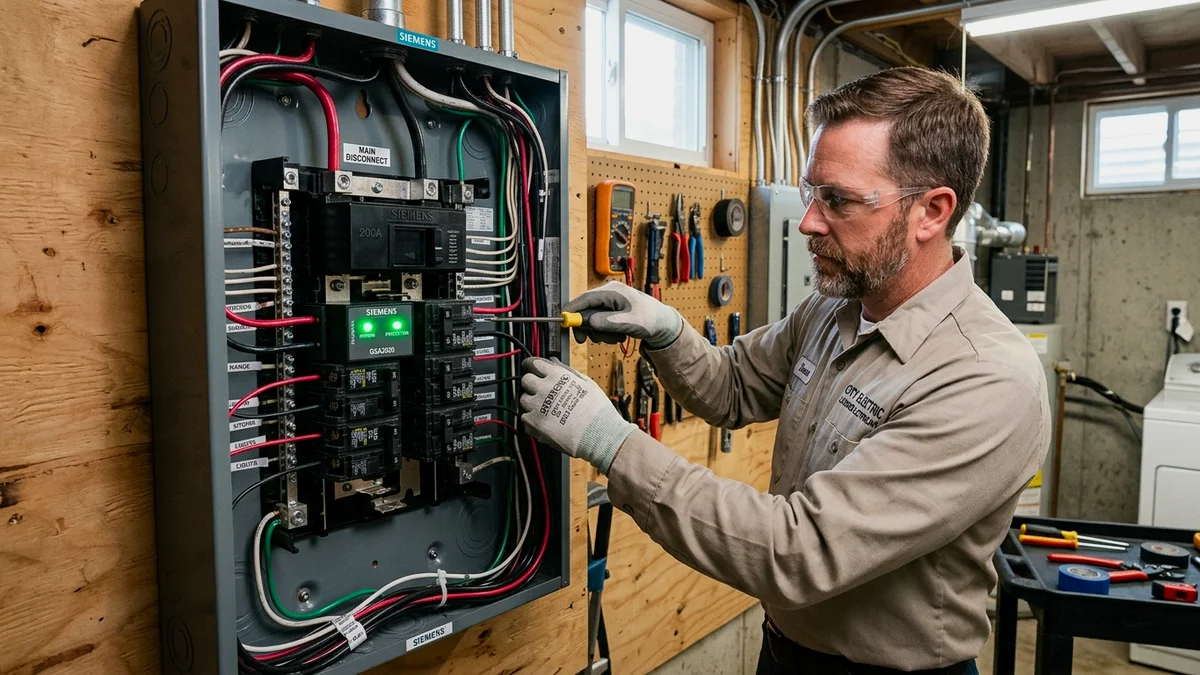
Professional Commercial Electrical Services Across Schenectady, New York
Commercial facilities operate under entirely different operational demands, regulatory codes, and electrical capacities than residential dwellings. A sudden electrical outage, an overloaded distribution transformer, or a failed machinery circuit in a commercial environment disrupts workflow, risks expensive inventory spoilage, halts customer transactions, and compromises worker safety. Commercial properties require heavy-duty three-phase distribution systems, rigid conduit raceways, dedicated equipment disconnects, and strict adherence to life-safety codes.
Our regional dispatch network coordinates qualified, professional commercial electrical contractors specializing in comprehensive commercial electrical services throughout Schenectady County. From historic downtown retail storefronts along Jay Street and State Street to suburban medical practices in Niskayuna, manufacturing facilities in Rotterdam, and commercial plazas in Scotia-Glenville, our network delivers robust trade execution.
Technicians provide turnkey electrical solutions for business owners, property managers, general contractors, and facility directors. Whether your enterprise requires a 480-volt three-phase service expansion via an electrical panel upgrade, commercial LED lighting retrofits through our lighting installation service, dedicated machinery branch circuits, or preventative thermographic maintenance, our contractors provide dependable, code-compliant service.
Complete Commercial Electrical Capabilities
Our commercial contracting network handles all phases of design, installation, troubleshooting, and preventative maintenance:
| Commercial Service Area | Core Technical Scope | Typical Commercial Applications | Primary Business Benefit |
| :--- | :--- | :--- | :--- | :--- |
| Three-Phase Service and Distribution | 120/208V and 277/480V 3-phase main distribution switchboards, dry-type step-down transformers | Corporate office buildings, industrial manufacturing, shopping centers | Balanced electrical loads, high motor efficiency, expanded capacity |
| Machinery and Equipment Branch Circuits | Dedicated 30A to 100A 480V circuits, magnetic motor starters, safety disconnect switches | Commercial bakeries, CNC machine shops, auto body repair bays, printing presses | Prevents equipment tripping, protects motor windings, satisfies OSHA |
| Commercial Lighting Retrofits and Controls | LED flat panel troffers (2x2 and 2x4), high-bay warehouse luminaires, occupancy sensors | Retail sales floors, corporate office parks, distribution warehouses | Reduces lighting energy consumption by up to 75%, enhances employee productivity |
| Life-Safety and Emergency Egress | Emergency backup lighting units, illuminated exit signs, battery pack maintenance | Multi-tenant office buildings, medical clinics, schools, restaurants | Guarantees compliance with NFPA 101 Life Safety Code and local fire codes |
| Commercial Tenant Fit-Outs | Complete rough-in and finish wiring, metal-clad (MC) cable runs, floor poke-through boxes | Leased retail spaces, dental offices, law firms, restaurant kitchens | Rapid project turnaround to facilitate tenant occupancy schedules |
| Facility Surge and Power Quality | Heavy-duty Type 1 and Type 2 Surge Protective Devices (up to 200 kA rating) | Data centers, server rooms, medical diagnostic facilities, financial firms | Safeguards mission-critical IT infrastructure via surge protection systems |
For property owners planning extensive commercial renovations or seeking custom project estimates, contact our commercial estimating desk through our direct contact portal.
Three-Phase Power: 120/208V vs. 277/480V Distribution
Commercial buildings in Schenectady utilize three-phase alternating current to power heavy mechanical loads and high-efficiency commercial equipment. Understanding the two primary commercial voltage standards helps property managers plan electrical infrastructure:
Comparison of Commercial Three-Phase Configurations:
1. 120/208-Volt Three-Phase Wye:
   - Provides 120 volts between any phase and neutral (powers standard office outlets, computers).
   - Provides 208 volts between any two phases (powers small commercial equipment, kitchen appliances).
   - Ideal for light commercial facilities, restaurants, retail shops, and professional offices.

2. 277/480-Volt Three-Phase Wye:
   - Provides 277 volts between any phase and neutral (powers high-efficiency commercial LED and fluorescent lighting).
   - Provides 480 volts between any two phases (powers heavy industrial motors, chillers, elevators, and large pumps).
   - Ideal for large commercial office towers, industrial manufacturing plants, and logistics warehouses.
Technicians install dry-type step-down distribution transformers to convert 480V three-phase utility power down to 120/208V subpanels, providing clean, stable power for office computer workstations and convenience receptacles while maintaining high-voltage efficiency for heavy building chillers.
Preventative Electrical Maintenance and Infrared Thermography
Unplanned electrical shutdowns in commercial settings can cost businesses thousands of dollars per hour in lost revenue and idle labor. Proactive maintenance is significantly more cost-effective than emergency repair.
Our network contractors perform scheduled preventative electrical maintenance aligned with NFPA 70B Recommended Practice for Electrical Equipment Maintenance:
- Infrared Thermal Imaging (Thermography): Scanning main switchgear, circuit breaker panels, bus ducts, and motor control centers under full operational load. Thermography detects high-resistance connections, overloaded phases, and loose terminal lugs long before components physically fail.
- Torque Verification: Using calibrated torque wrenches to re-torque all mechanical lug connections to manufacturer specifications, compensating for thermal expansion and contraction cycles.
- Contact Cleaning and Lubrication: Removing industrial dust, debris, and conductive atmospheric contaminants from switchgear cabinets and lubricating moving breaker mechanisms.
- Power Factor and Harmonics Analysis: Measuring non-linear harmonic distortion generated by variable frequency drives (VFDs) and computer power supplies to prevent transformer overheating.
Municipal Commercial Permitting and OSHA Compliance in Schenectady
Commercial electrical work within the City of Schenectady requires rigorous regulatory oversight. All commercial installations must comply with:
- The New York State Uniform Fire Prevention and Building Code (Commercial Provisions)
- Local municipal amendments codified in City of Schenectady Code Chapter 138
- OSHA Electrical Safety Standards (29 CFR 1910 Subpart S for General Industry)
- NFPA 70E Standard for Electrical Safety in the Workplace
Network commercial contractors coordinate directly with the City of Schenectady Bureau of Code Enforcement at City Hall (105 Jay Street, Room 17) to file commercial permit applications, submit engineered electrical drawings, and coordinate certified commercial third-party inspections through recognized agencies (such as NYEIA, MDIA, or Commonwealth Electrical Inspection Service).
Furthermore, when upgrading commercial service entrance capacity from 400 amps to 1,200 amps or higher, contractors coordinate engineering reviews and transformer pad allocations with National Grid.
Frequently Asked Questions Regarding Commercial Electrical Services
Do commercial technicians perform emergency troubleshooting after standard hours?
Yes. Commercial electrical emergencies—such as main switchgear failures, refrigeration circuit shutdowns, and storm outages—are prioritized through our emergency electrician dispatch protocol to minimize costly business downtime.
How does LED lighting retrofit benefit my commercial facility?
Upgrading outdated fluorescent T8/T12 fixtures or metal halide high-bays to commercial LED lighting typically reduces lighting electrical consumption by 60% to 75%, eliminates recurring ballast maintenance costs, and improves employee visual comfort. In addition, many commercial retrofits qualify for substantial utility rebate incentives through National Grid’s energy efficiency programs.
What is the purpose of an exterior emergency disconnect for commercial buildings?
Under National Electrical Code requirements and local fire prevention codes, commercial facilities must feature clearly labeled exterior emergency disconnect switches or shunt-trip controls so local fire departments can de-energize the building immediately upon arrival during a fire emergency.
Can your network handle tenant build-outs in multi-tenant commercial plazas?
Yes. Technicians routinely execute full electrical fit-outs for leased retail, restaurant, and office spaces, including conduit bending (EMT), dedicated equipment circuits, subpanel installations, and code-compliant emergency exit lighting.
How do I request a commercial proposal or project estimate?
To discuss an upcoming commercial project, tenant build-out, or preventative maintenance contract, contact our dispatch desk at (518) 490-0581 or submit your project details through our online contact form. A commercial project coordinator will review your specifications and schedule an on-site facility evaluation.
Transparent Pricing and Diagnostic Disclosure
Estimates are for budgeting purposes only. Actual prices vary based on on-site conditions.
Project costs, diagnostic fees, and installation rates displayed or discussed are regional market estimates for Schenectady, NY and surrounding jurisdictions. Actual pricing varies based on exact site conditions, code compliance requirements, panel capacity, materials needed, and municipal permit parameters.
Every service call begins with a comprehensive on-site physical evaluation and a clear written estimate before any work commences. No surprise fees, hidden travel charges, or unapproved billings.