Quick Key Takeaways – Emergency Electrician
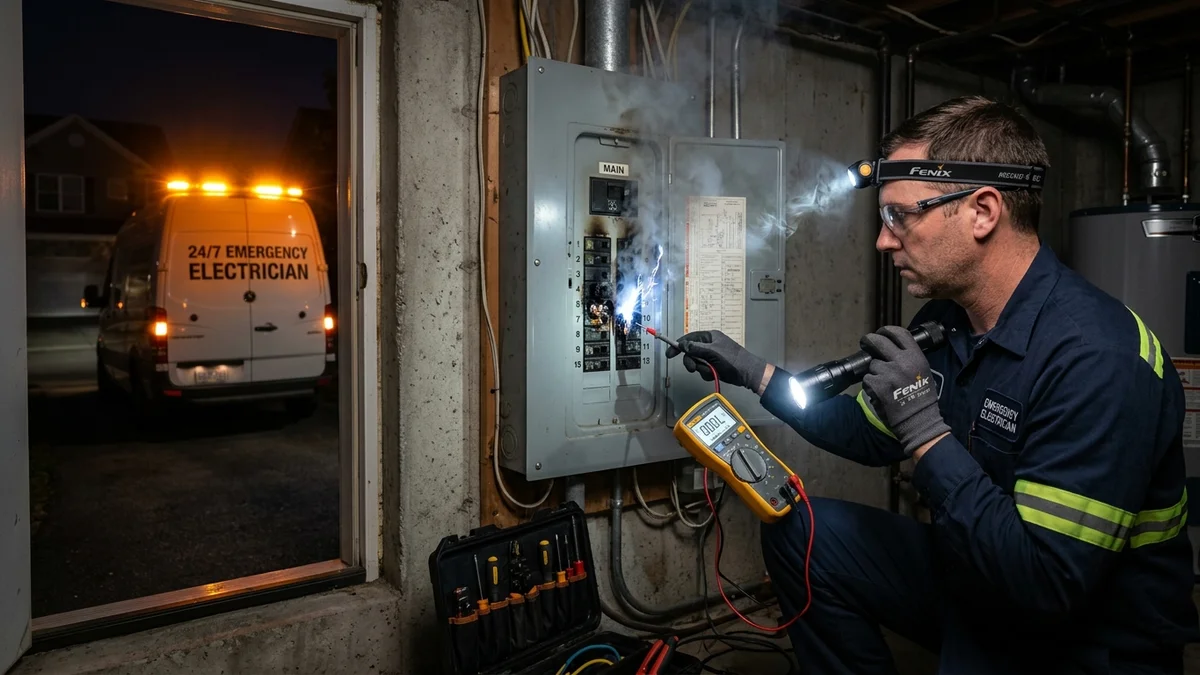
Urgent Electrical Troubleshooting and Rapid Field Dispatch in Schenectady, NY
Electrical emergencies do not wait for convenient business hours. A smoking outlet, an arcing circuit breaker, a sudden total loss of power during an upstate winter freeze, or water intrusion into a basement service panel requires immediate professional intervention. Delaying repairs or attempting uncertified diagnostic work on energized high-voltage systems can lead to catastrophic electrical fires, severe shock hazards, or irreversible equipment destruction.
When an unexpected electrical hazard threatens your residential property or commercial facility in Schenectady, our direct dispatch desk connects you with experienced, professional technicians equipped to triage and isolate urgent failures. As a vital component of our comprehensive residential and commercial electrical services, our emergency response protocol coordinates qualified local contractors across Schenectady, Rotterdam, Niskayuna, and Scotia-Glenville.
Technicians arrive equipped with advanced multimeters, insulation resistance testers, and thermal imaging cameras, enabling them to pinpoint hidden faults quickly. Every emergency call begins with immediate safety isolation, followed by an empirical on-site diagnostic evaluation and a clear written estimate before any permanent repair work commences.
What Constitutes a Genuine Electrical Emergency?
Understanding the difference between a routine maintenance issue and an immediate safety hazard is essential for protecting your property and family. If you observe any of the following critical conditions, you should contact our emergency dispatch desk immediately:
| Emergency Symptom | Underlying Physical Cause | Immediate Danger Level | Critical Homeowner Action |
|---|---|---|---|
| Active Smoke or Burning Plastic Odor | Melting conductor insulation, loose high-resistance electrical connections, failing receptacle terminals | EXTREME DANGER: Imminent electrical fire hazard | Evacuate room, de-energize main breaker if safe, call 911 if flame is present, then call dispatch |
| Loud Buzzing, Hissing, or Arcing at Panel | Defective breaker bus bar connection, loose main lug, internal mechanical failure of circuit breaker | HIGH DANGER: Risk of arc-flash, explosion, or panel fire | Keep distance from panel, do not touch enclosure with bare hands, contact emergency dispatch |
| Sudden Partial Power Loss (Brownout) | Dropped utility neutral conductor, burned main service lug, damaged service entrance cable | HIGH DANGER: Voltage imbalance can destroy electronics and appliances | Unplug sensitive electronics, avoid using large 240V appliances, request emergency diagnostic |
| Water Contact with Breaker Panel or Outlets | Basement flooding, burst plumbing pipe, severe roof leak over electrical equipment | EXTREME DANGER: Lethal electric shock and water-conducted short circuits | Do not step in standing water near electrical panels; contact dispatch for emergency isolation |
| Scorched or Discolored Wall Outlets | Chronic overheating caused by poor contact tension, backstabbed terminal failure, overloaded branch circuit | MODERATE-HIGH DANGER: Growing fire hazard within wall cavity | Stop using all outlets on affected circuit; shut off individual breaker |
| Shock or Strong Tingle from Fixtures/Appliances | Ground fault, missing equipment grounding conductor, energized chassis due to insulation breakdown | HIGH DANGER: Life-threatening electrocution risk | Disconnect appliance if safe, refrain from touching metal housing, request prompt service |
If you detect burning odors or notice flickering fixtures throughout your home, consult our educational guide on common warning signs of electrical problems in older homes to understand how hidden wire degradation contributes to sudden failures.
Immediate Homeowner Safety Protocols While Awaiting Technician Dispatch
Your safety and the preservation of your home are the highest priorities during an electrical crisis. While a qualified field contractor is en route to your Schenectady residence, follow these safety protocols:
- Keep Your Distance from Hazardous Equipment: If an electrical panel, switch, or receptacle is buzzing loudly, smoking, or visibly sparking, stay several feet away. Never attempt to poke wires or insert tools into an energized electrical box.
- De-Energize the Circuit Only If Safe: If the problem is confined to a single appliance or room, and you can safely access the main distribution panel without stepping in water or touching bare metal, switch the individual circuit breaker to the "OFF" position. If you smell smoke near the main panel, do not touch it; evacuate the area immediately.
- Unplug Sensitive Electronics: During partial power outages or voltage fluctuations, voltage surges can destroy expensive microprocessors in computers, televisions, and modern appliances. Unplug delicate devices until full, stable power is restored. Homeowners can prevent future surge damage by investing in whole-home surge protection systems.
- Never Reset a Tripping Breaker Repeatedly: A circuit breaker that trips immediately upon resetting is performing its critical safety function by interrupting a dead short circuit or ground fault. Forcing the breaker to hold or repeatedly resetting it can overheat the internal mechanism and spark a fire behind the wall. Review our diagnostic breakdown on why circuit breakers keep tripping.
- Prepare the Work Area: If safe to do so, clear furniture and belongings away from the electrical panel, crawl space access, or affected outlets so the responding technician can access the equipment without delay upon arrival.
Technical Emergency Diagnostic Procedures
When an emergency technician arrives at your Schenectady property, work proceeds according to a disciplined, safety-first diagnostic sequence:
1. Visual and Sensory Inspection
The technician performs a thorough sensory inspection, checking for thermal distortion, scorch marks, melted wire jackets, and signs of arcing along the service entrance conductors, meter base, and distribution panel.
2. Calibrated Multimeter Voltage and Continuity Testing
Using high-precision digital multimeters, the technician measures phase-to-phase and phase-to-neutral voltages. Standard residential single-phase services should measure approximately 120 volts between hot and neutral, and 240 volts between the two ungrounded service legs. Significant voltage drops or imbalanced readings (such as 85 volts on one leg and 155 volts on the other) pinpoint a compromised utility neutral connection, requiring immediate coordination with National Grid.
3. Infrared Thermal Imaging Analysis
Thermal imaging cameras detect hidden resistance heat in electrical switchgear that is invisible to the naked eye. Loose terminal screws, corroded bus bar stabs, and overloaded circuits generate localized heat signatures long before physical smoke appears. Thermography allows the technician to identify failing components without invasive demolition.
4. Circuit Isolation and Temporary Stabilization
If an immediate permanent repair is not possible due to late-night material availability or utility involvement, the technician safely isolates the compromised circuit, terminates exposed wiring inside rated junction boxes, and restores safe power to the unaffected portions of the home so critical heating systems and refrigeration remain operational.
5. Clear Project Estimate for Permanent Remediation
Following fault isolation, the technician presents a clear written estimate detailing the permanent repairs required to restore full code compliance. In cases where the main panel has sustained extensive thermal damage, a complete modernization via an electrical panel upgrade may be recommended.
Comparison of Emergency Stabilization vs. Permanent Electrical Repair
| Service Aspect | Temporary Emergency Stabilization | Permanent Code-Compliant Repair |
|---|---|---|
| Primary Objective | Eliminate immediate shock or fire hazard; restore critical power | Permanently eliminate root failure cause; bring installation to modern code |
| Typical Actions | De-energize faulty branch, cap conductors, bypass damaged breaker | Replace damaged bus bars, pull new home runs, replace load center |
| Materials Used | Heavy-duty wire nuts, temporary junction covers, circuit lockouts | Brand-new copper conductors, UL-listed breakers, new distribution panels |
| Municipal Permitting | Generally exempt under emergency safety stabilization rules | Permitted through City of Schenectady Bureau of Code Enforcement |
| Final Inspection | Operational testing by responding technician | Final sign-off by certified third-party electrical inspection agency |
Schenectady Housing Context and Emergency Risks
Schenectady’s diverse residential architecture directly impacts the types of electrical emergencies that occur across the city. In historic neighborhoods such as the Stockade Historic District and the GE Realty Plot, vintage homes built between 1890 and 1930 frequently retain remnants of knob and tube wiring concealed within balloon-frame walls. When modern owners plug high-wattage space heaters or portable air conditioners into these legacy circuits, ungrounded conductors overheat rapidly, increasing fire risks.
In neighborhoods like Bellevue, Mont Pleasant, and Woodlawn, homes built during the mid-20th century often feature Federal Pacific Electric (FPE) Stab-Lok or Zinsco breaker panels. Decades of independent testing have revealed that FPE breakers frequently fail to trip when overloaded, allowing dangerous current to flow unimpeded. When a sudden overload occurs in an FPE-equipped home, the breaker may fuse to the bus bar rather than tripping, creating an urgent fire hazard.
Furthermore, harsh upstate New York winters subject Schenectady properties to heavy snow loads, ice dams, and severe wind gusts along the Mohawk Valley. Ice accumulation on tree branches frequently pulls overhead utility service drops away from exterior home weatherheads, ripping the meter pan off the siding and severing the service ground. Technicians coordinate urgent repairs to exterior service masts and meter sockets, working alongside National Grid crews to restore power safely.
Frequently Asked Questions Regarding Emergency Electrical Services
How quickly can a technician be dispatched to my Schenectady home?
Our field coordinator assesses the urgency and location of your call immediately upon contact. Qualified technicians stationed throughout Schenectady County are dispatched directly, typically arriving promptly within agreed service windows.
What should I do if my electrical panel is humming or buzzing loudly?
A buzzing sound from a panel indicates serious vibration caused by an arcing breaker, a loose main lug, or extreme overcurrent. Stay away from the panel, do not touch the metal cover with bare hands, and call our emergency dispatch hotline immediately.
Do emergency services include upfront written estimates?
Yes. Following an initial diagnostic evaluation to identify the source of the emergency, the technician provides a clear written project estimate detailing the required parts, labor, and costs before proceeding with permanent repairs.
Will the responding technician coordinate permits if an emergency panel upgrade is needed?
Yes. If emergency repairs require replacing the main electrical service entrance or panel, the contractor coordinates emergency permit filings with the City of Schenectady Bureau of Code Enforcement and arranges required utility disconnections with National Grid.
Can your technicians service commercial facilities during an emergency?
Yes. Our network includes commercial specialists equipped to troubleshoot 3-phase power distribution, emergency lighting, and commercial equipment circuits for retail shops, restaurants, and office buildings across Schenectady. Learn more about our commercial electrical services.
For immediate emergency assistance, call our direct Schenectady dispatch desk at (518) 490-0581. Our local response team is standing by to coordinate prompt, professional field service.
Transparent Pricing and Diagnostic Disclosure
Estimates are for budgeting purposes only. Actual prices vary based on on-site conditions.
Project costs, diagnostic fees, and installation rates displayed or discussed are regional market estimates for Schenectady, NY and surrounding jurisdictions. Actual pricing varies based on exact site conditions, code compliance requirements, panel capacity, materials needed, and municipal permit parameters.
Every service call begins with a comprehensive on-site physical evaluation and a clear written estimate before any work commences. No surprise fees, hidden travel charges, or unapproved billings.