Quick Key Takeaways – Generator Installation
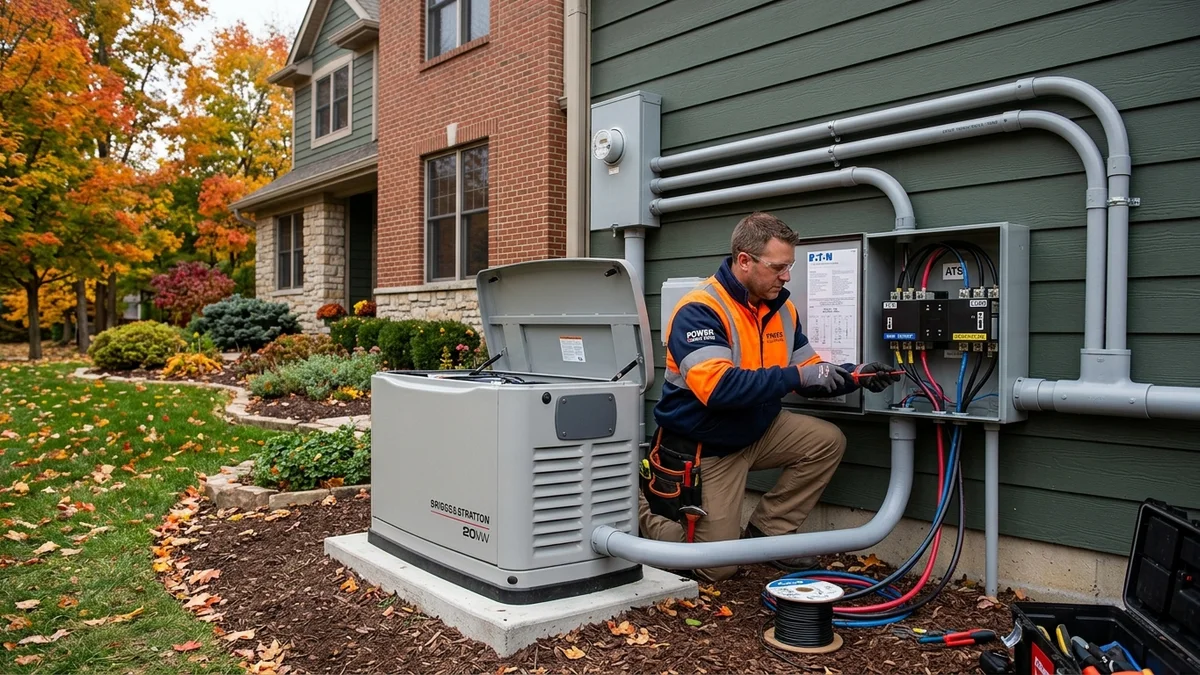
Reliable Backup Generator Installations and Transfer Switches in Schenectady, NY
Upstate New York winters present extreme weather challenges. Heavy lake-effect snowstorms, severe ice accumulations, freezing rain, and high wind gusts along the Mohawk Valley frequently pull tree limbs down onto overhead utility power lines. In Schenectady County, winter outages can last anywhere from several hours to multiple freezing days. During extended winter power disruptions, an unpowered home rapidly loses heat, exposing plumbing pipes to freezing and burst risks, rendering basement sump pumps inoperable, and leaving families without hot water or refrigeration.
Connecting a portable or standby generator to your home’s electrical distribution system provides critical emergency resilience. However, operating a generator requires certified, code-compliant switching equipment. Running extension cords through cracked windows or attempting DIY "suicide cords" connected directly to household outlets creates severe electrocution hazards, carbon monoxide risks, and dangerous utility backfeeding that can injure utility line workers.
Our regional dispatch network coordinates qualified, professional electrical contractors who specialize in safe backup generator installations throughout Schenectady, Rotterdam, Scotia-Glenville, and Niskayuna. Technicians install mechanical manual interlock kits, dedicated generator inlet boxes, and automatic transfer switches compliant with the National Electrical Code and National Grid safety standards.
If your existing breaker panel lacks physical space for an interlock or requires main service modernization, technicians can coordinate your generator hookup alongside an electrical panel upgrade to 200 amps.
Comparison of Backup Power Configurations
Property owners in Schenectady can select from three primary generator backup configurations depending on their budget, electrical capacity needs, and operational preferences:
| Generator Setup Option | System Architecture | Power Delivery Method | Primary Advantages | Budget Range (Equipment and Labor) |
|---|---|---|---|---|
| Manual Interlock Kit and Inlet Box | Mechanical slider plate installed on main panel with exterior power inlet | Portable gas or dual-fuel generator (5 kW to 12 kW) | Most cost-effective; powers any circuit up to generator capacity; zero backfeeding | $850 to $1,850 (Affordable and Flexible) |
| Manual Transfer Switch (6–10 Circuits) | Dedicated subpanel pre-wired to essential emergency circuits | Portable gas or propane generator (5 kW to 10 kW) | Reliable dedicated circuit switching; simple toggle switches; meters display load | $1,200 to $2,400 (Targeted Protection) |
| Automatic Transfer Switch (Whole-Home Standby) | Automated smart transfer switch connected to stationary generator | Permanently installed whole-home standby generator (14 kW to 26 kW) | Hands-free operation; starts automatically in 10 seconds; powers entire home seamlessly | $4,500 to $12,000+ (Turnkey Complete Backup) |
For detailed budgeting guidelines on labor rates and electrical installation variables, consult our comprehensive Schenectady electrician cost guide.
The Critical Danger of Electrical Utility Backfeeding
The single most dangerous hazard associated with uncertified generator connections is electrical backfeeding. When a generator is plugged directly into a household outlet without an approved mechanical transfer switch or interlock device, electrical current flows backward through your distribution panel, out through the service entrance conductors, and into the utility transformer serving your street.
Hazardous Backfeed Mechanism:
[Generator: 240V] ---> [Home Panel] ---> [Service Drop] ---> [Pole Transformer: 240V to 7,200V+] ---> [Utility Power Lines]
The neighborhood utility pole transformer operates in reverse, stepping the 240-volt generator current up to 7,200 volts or higher along overhead lines that utility workers believe are de-energized. This creates a lethal shock hazard for National Grid line crews working in freezing conditions to restore neighborhood power.
Under the National Electrical Code (NEC Article 702), all residential backup power systems must incorporate an approved transfer mechanism that physically prevents simultaneous connection to both the utility power source and the generator power source. Our network contractors install UL-listed mechanical interlock plates and transfer switches that guarantee zero utility backfeeding.
What Circuits Should You Power During a Schenectady Winter Outage?
When sizing a backup generator and configuring your transfer equipment, prioritizing vital household loads ensures comfort, structural protection, and safety during extended winter outages:
- Heating System Controls and Blowers: Forced-air furnace blower motors, hydronic boiler circulator pumps, and pellet stove feeds require continuous 120V power to prevent home freezing.
- Basement Sump Pumps: Critical for preventing basement flooding during winter thaw events or heavy spring rainstorms accompanying power outages.
- Refrigeration and Freezers: Preserving perishable food supplies during multi-day outages.
- Kitchen Convenience Circuits: Powering small cooking appliances (microwave, coffee maker, induction hot plate) and countertop outlets.
- Well Pump (If Applicable): Suburban and rural properties in Rotterdam Junction, Glenville, or Niskayuna with private wells require 240V power to maintain water pressure.
- Essential Lighting and Communications: LED lighting circuits in living areas, stairwells, and Wi-Fi router / modem outlets to stay connected with weather alerts.
If your home experiences persistent electrical trips when running heavy heating or pumping equipment, consult our troubleshooting guide on why circuit breakers keep tripping.
Technical Installation Workflow: Manual Generator Interlock Setup
A manual interlock installation is the most popular, cost-effective backup power solution for Schenectady homeowners. Technicians execute the installation through a disciplined four-step procedure:
Step 01: Exterior Power Inlet Box Installation
- Mounting a heavy-duty NEMA 3R weather-resistant generator inlet box on the building exterior.
- Locating the inlet box at least 15 feet away from all operable windows, doors, and vents to prevent exhaust fumes from entering the home.
- Installing rigid conduit through the foundation wall to the interior distribution panel.

Step 02: Dedicated Generator Breaker Installation
- Running heavy-gauge 10/3 or 8/3 copper conductors from the exterior inlet box to the main panel.
- Installing a dedicated double-pole 30-amp or 50-amp circuit breaker in the top right or top left positions of the main panel.

Step 03: Mechanical Interlock Plate Fabrication and Mounting
- Installing a precision-machined steel mechanical interlock plate directly onto the dead-front cover.
- The physical interlock bracket guarantees that the generator breaker CANNOT be turned on while the main utility breaker is on, and vice-versa.

Step 04: Commissioning, Load Testing, and Homeowner Walkthrough
- Connecting a portable generator to test active power delivery across household circuits.
- Verifying correct phase rotation and voltage output under active household loads.
- Providing the homeowner with a laminated operational checklist mounted directly to the panel.
To protect sensitive furnace control boards and home appliances from harmonic distortion or voltage fluctuations generated by portable generators, technicians strongly recommend installing whole-home surge protection.
Municipal Permits and Safety Inspections in Schenectady
Installing a backup generator power inlet or transfer switch alters your home's main electrical service distribution. Under City of Schenectady Code Chapter 138 and the New York State Uniform Code, an electrical permit is legally required.
Network contractors manage the complete compliance process:
- Submitting electrical permit applications to the City of Schenectady Bureau of Code Enforcement at City Hall.
- Coordinating certified third-party inspections through recognized agencies (such as NYEIA or MDIA).
- Securing the official Electrical Certificate of Compliance that protects your property insurance coverage and satisfies all National Grid safety mandates.
When unexpected outages or severe storm damage disable your primary electrical equipment, our dedicated emergency electrician dispatch service provides prioritized field support.
Frequently Asked Questions Regarding Generator Installations
What is the difference between a manual interlock kit and an automatic transfer switch?
A manual interlock kit requires the homeowner to roll out a portable generator, plug in the heavy-duty power cord, manually switch off the main utility breaker, slide the interlock plate, and turn on the generator breaker. An automatic transfer switch connects to a stationary standby generator that detects power loss and turns on automatically within 10 seconds without any manual intervention.
How far away from my home should a portable generator be placed?
Portable generators must be operated outdoors at least 15 to 20 feet away from all doors, windows, and soffit vents, with the engine exhaust pointed away from the building. Never run a generator in a garage, basement, carport, or covered porch due to deadly carbon monoxide gas risks.
What size generator do I need to power my Schenectady home?
For essential emergency circuits (furnace blower, refrigerator, sump pump, lights, Wi-Fi), a 5,000 to 7,500-watt portable generator is typically sufficient. To power central air conditioning, an electric water heater, or an electric range, a 9,000 to 12,000-watt portable unit or a 14 kW to 22 kW whole-home standby generator is recommended.
Can an interlock kit be installed on any electrical panel?
Interlock kits are manufactured specifically for individual panel models. They require an available double-pole space directly adjacent to the main breaker. If your panel is obsolete (such as a split-bus or fuse box), an electrical panel upgrade to 200 amps is required before an interlock can be installed.
Do generator installations require maintenance?
Yes. Portable generators should be exercised under load every few months, and engine oil should be changed according to manufacturer schedules. Whole-home standby units execute automated weekly self-test exercise cycles and require annual servicing.
To schedule an on-site generator consultation and receive an itemized, clear written estimate in Schenectady, call our direct field dispatch desk at (518) 490-0581 today.
Transparent Pricing and Diagnostic Disclosure
Estimates are for budgeting purposes only. Actual prices vary based on on-site conditions.
Project costs, diagnostic fees, and installation rates displayed or discussed are regional market estimates for Schenectady, NY and surrounding jurisdictions. Actual pricing varies based on exact site conditions, code compliance requirements, panel capacity, materials needed, and municipal permit parameters.
Every service call begins with a comprehensive on-site physical evaluation and a clear written estimate before any work commences. No surprise fees, hidden travel charges, or unapproved billings.